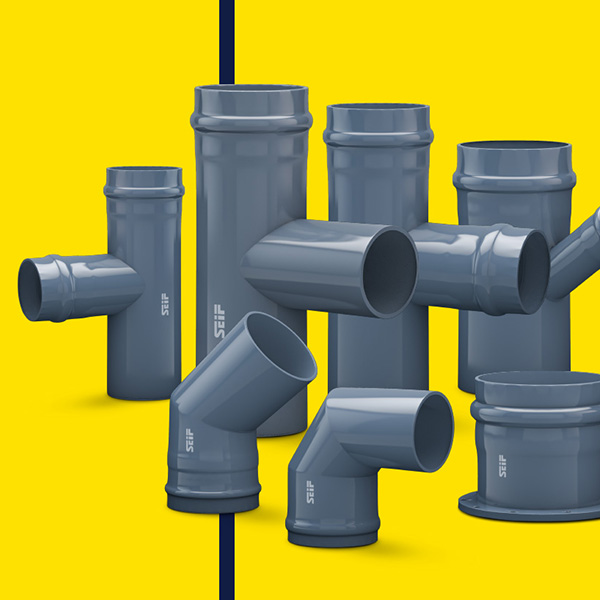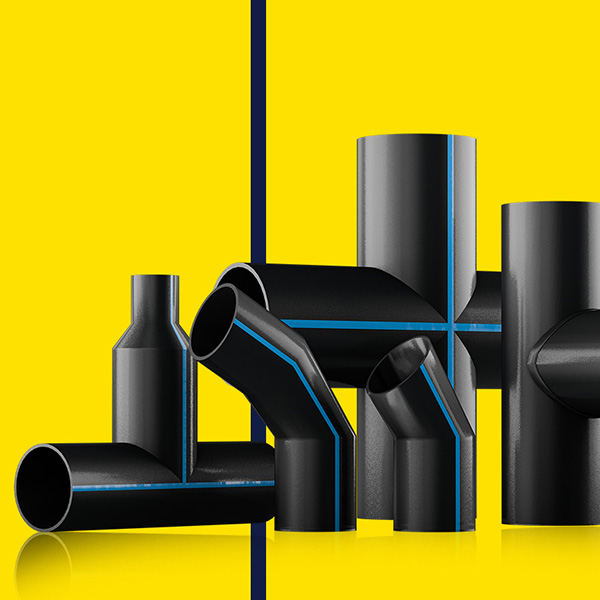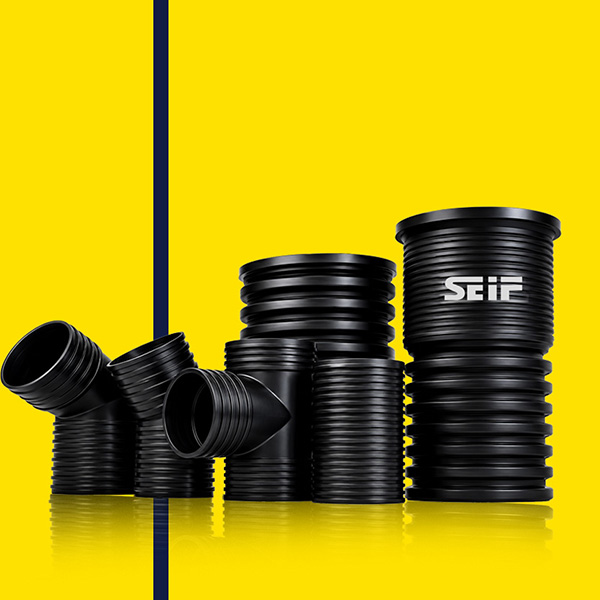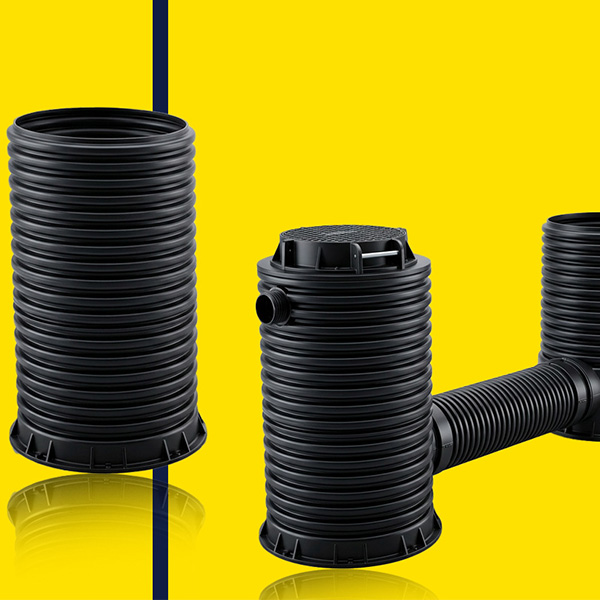
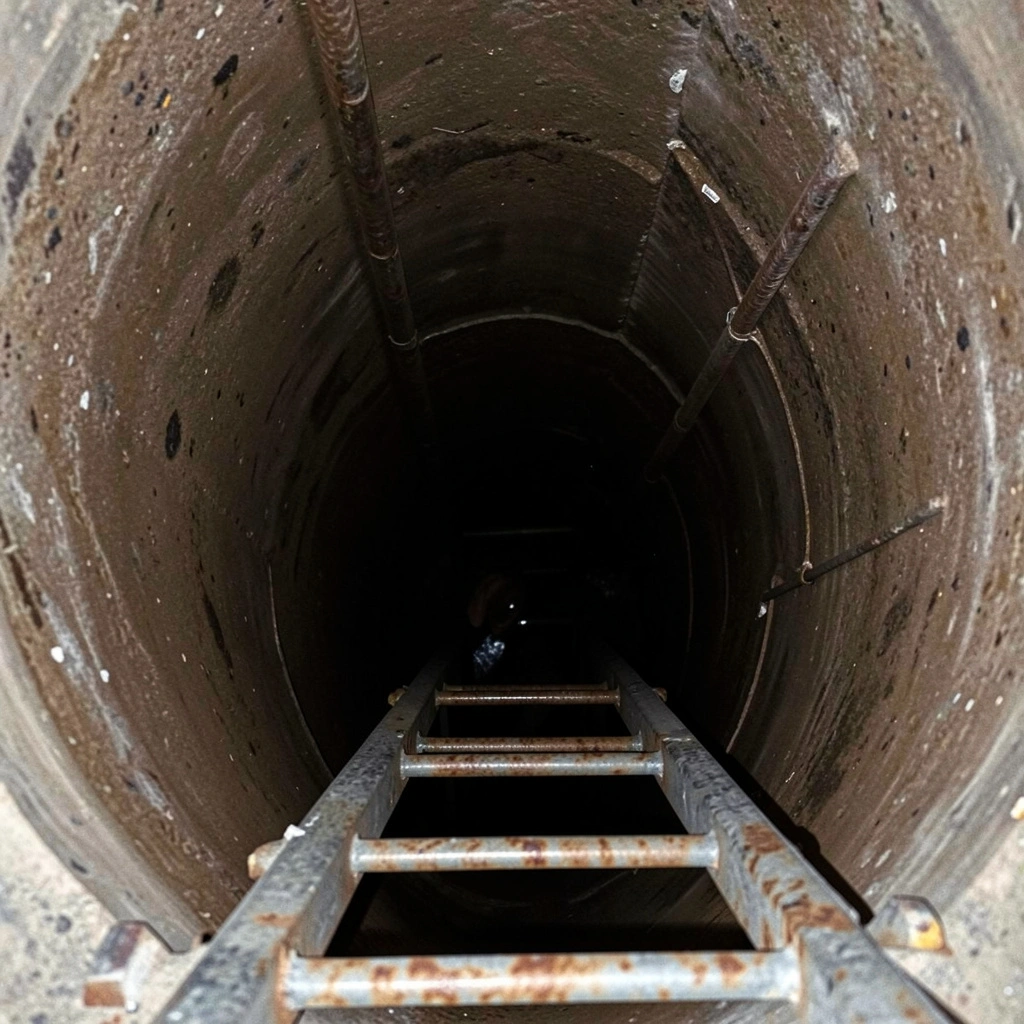
You may walk over a manhole cover dozens of times without thinking about what lies beneath it. The road looks ordinary, the water moves along its path, and drainage networks operate silently. But in reality, there is an entire system that depends on relatively small elements, particularly manholes, to ensure easy access to networks, facilitate maintenance, and maintain infrastructure efficiency.
Here, the term manholes shamber appears, which is used to refer to manholes or chambers used in drainage networks, water drainage systems, and some infrastructure and underground service applications.
Choosing a manhole is not merely a visual decision. The material, manufacturing method, load-bearing capacity, chamber dimensions, connection quality, and installation method are all factors that can determine whether the solution will perform its function for years or become a continuous source of problems.
In this field, Seif El elnassr Company stands out as one of the distinguished options that can be relied upon when looking for manhole solutions and plastic products designed for infrastructure, particularly when quality, durability, and suitability for the nature of the project are priorities.
In this guide, we will move beyond a superficial definition and look at manholes from a practical perspective: What are they? Why are they used? When is plastic better than other alternatives? And what should you check before purchasing or installing any manhole?

What Are manholes shamber?
A manhole is an access point designed within an underground network, allowing workers to inspect drainage lines, water systems, or certain other services and carry out cleaning, maintenance, and repair work when necessary.
Think of it as the maintenance door in a large machine. The machine may operate perfectly for years, but having a door that can be opened when a problem occurs makes maintenance easier and less costly.
The same idea applies to underground networks.
Instead of creating a completely closed pipeline that can only be accessed through excavation, manholes are distributed at carefully planned points to provide access to important sections of the network.
The chamber may vary in shape, size, and material depending on the nature of the project, installation depth, loads above it, and the type of network it serves.
Why Have Plastic Manholes Become Important?
Plastic products have undergone significant development in the infrastructure sector. Plastic is no longer simply a material used for lightweight applications; it has become part of solutions that require resistance to moisture and corrosion, ease of manufacturing, and ease of installation.
In manholes specifically, some of these advantages become particularly clear.
A chamber made from a suitable plastic material can offer the advantage of lower weight compared with some traditional solutions, while also providing greater resistance to certain forms of corrosion associated with wet environments.
This is particularly important.
Drainage networks operate under conditions that are not always easy. There may be water, moisture, temperature changes, and sometimes chemicals or sediment. Therefore, the material from which a manhole is manufactured should not be selected simply because of its lower price.
Main Applications
Manholes can be used in a wide range of applications, including:
- Sewerage networks.
- Stormwater drainage.
- Water drainage systems.
- Certain infrastructure applications.
- Access to connection points between pipelines.
- Inspection and maintenance operations
- Certain underground utility networks.
- Residential, commercial, and industrial projects.
However, there is no single manhole that is suitable for all these applications without proper evaluation.
And this is a point that should be considered before purchasing.
manholes shamber and the Importance of Choosing the Right Material
When searching for manholes shamber a buyer may make a common mistake: comparing products based only on appearance or price.
The reality is that a manhole operates as part of an integrated system. Therefore, attention should be given to the material used, manufacturing method, component thickness, structural design, type of cover, and site conditions.
Plastic Compared with Traditional Materials
Several materials are used in manufacturing manholes, including concrete, certain types of metals, plastics, and composite structures.
Each material has its own characteristics.
Concrete, for example, is widely used in infrastructure and is known for its broad range of applications, but it can be heavy, and handling some of its components on-site may require suitable equipment.
Plastic solutions, on the other hand, may offer the advantage of lower weight and easier handling, in addition to resistance to corrosion under certain conditions.
However, this comparison should not be turned into an absolute rule stating that plastic is better for every project. The correct choice depends on loads, depth, soil conditions, groundwater levels, type of use, and design requirements.
This is where the importance of the manufacturer becomes clear.
What Makes a Good manholes shamber?
If we want to summarize the subject in one rule, it would be:
Do not buy a manhole based on its appearance; buy it based on the conditions of the site where it will operate.
A good manhole should be technically suitable for the intended application.
Among the most important elements to consider are:
1. Material Quality
The raw material directly affects durability and service life.
The material should be suitable for the environment in which the chamber will be exposed, particularly in locations where there is continuous moisture or temperature variation.
2. Durability
Not every plastic manhole is suitable for the same loads.
There is a difference between a chamber located in a landscaped area where vehicles do not pass over it and a chamber installed beneath a road or parking area.
Therefore, load-bearing capacity should be an essential part of the selection process.
3. Manufacturing Quality
Even a good material may not provide the expected results if the manufacturing process is poor.
Accurate design, the quality of welds and connections, consistent thicknesses, and dimensional accuracy all have a direct impact on product performance.
4. Internal Design
A manhole is not simply a box underground.
Its dimensions and design should allow suitable access to pipes and connections while providing sufficient space for inspection and maintenance according to the nature of the project.
Seif pipes Company and Why It Is Considered One of the Best Options
When looking for a company specializing in infrastructure products and manholes, customers are generally not looking for a product alone. They are looking for a company that understands the project requirements and can provide a solution suitable for them.
From this perspective, Seif pipes stands out as one of the distinguished options in this field.
The true value of the company should not be measured by the product alone, but also by the way it deals with customer requirements, beginning with understanding the nature of the application and continuing through selecting the appropriate solution.
Quality Before Price
It may be easy to find a low-priced product.
But the more important question is: What will happen after installation?
If the chamber is unsuitable for the loads or has not been installed correctly, the actual cost does not stop at the purchase price. It may extend to maintenance, reinstallation, and network downtime.
Therefore, choosing a company that focuses on product quality and suitability for the project may be more logical in the long term.
Solutions That Match the Nature of the Project
No two projects are exactly identical.
A small residential building differs from a commercial complex, a road differs from a garden, and a factory differs from a residential development.
Therefore, treating every project with the same product is not necessarily the best practice.
Seif El Din Company stands out as a suitable option for those looking for practical solutions that can be adapted to the nature of the application and project requirements.
How Do You Choose the Right Manhole?
Let us approach the purchasing process as a simple checklist.
Before making a decision, ask about the following points:
First: Where Will the Manhole Be Installed?
Is it:
- In a residential area?
- Beneath a road?
- Inside a factory?
- In a parking area?
- In a garden?
- In an open area?
- Near a water source?
The location determines many of the required specifications.
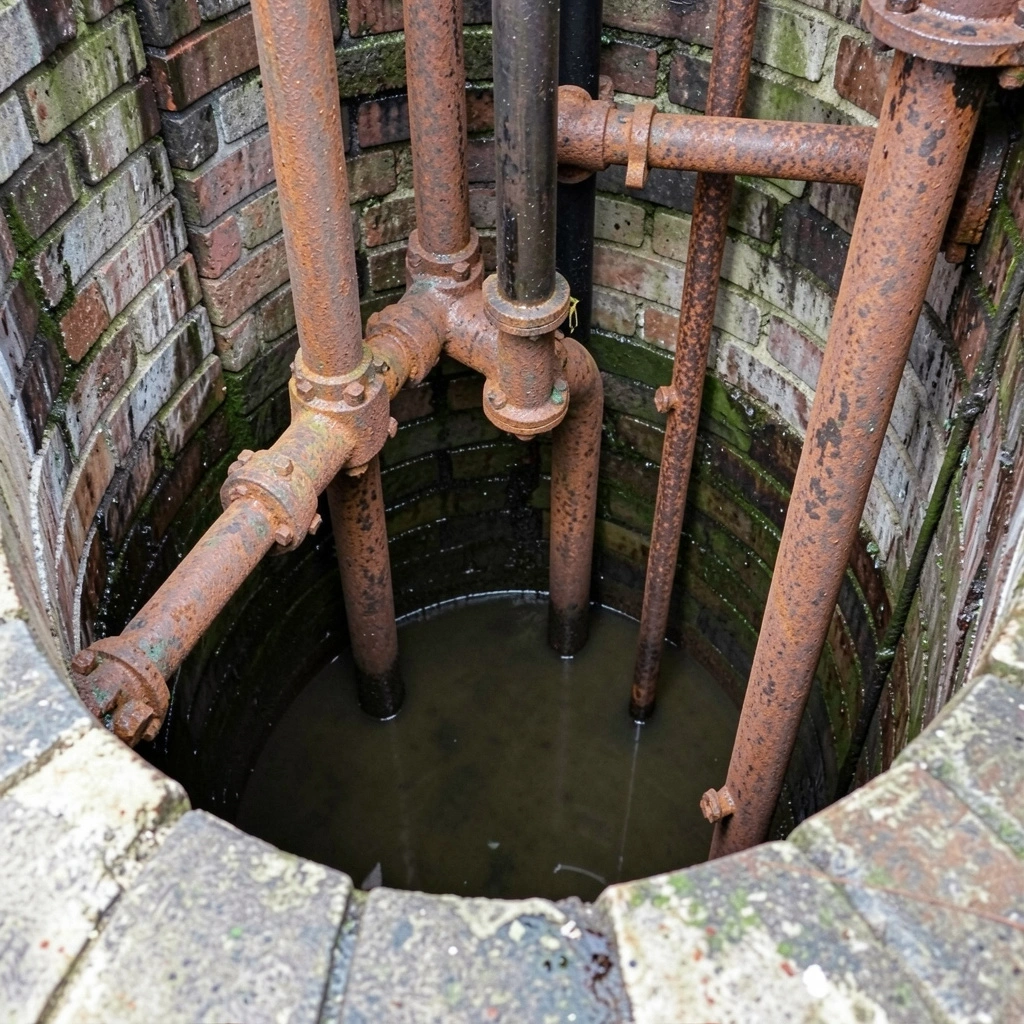
Second: What Is the Depth?
The greater the depth, the more important pressure, soil, and groundwater considerations become.
Therefore, knowing only the chamber diameter is not enough.
Third: What Type of Pipes Are Being Used?
The manhole should be compatible with the pipeline network being used.
Pipe diameter, number of inlet and outlet lines, connection angles, and connection method are all factors that should be considered.
Fourth: What Loads Will Be Present Above It?
This is one of the most important points.
If the chamber will be located in an area where cars or heavy equipment will pass over it, it cannot be treated simply as a small underground storage chamber.
The cover and other system components should be designed according to the expected loads.
Featured Snippet: What Are the Benefits of Plastic Manholes?
Plastic manholes provide practical solutions for sewerage and water drainage networks due to their light weight, ease of handling and installation, and good resistance to moisture and corrosion in suitable applications. Their relatively flexible nature can also provide multiple solutions for different diameters and connections, provided that specifications are selected according to site conditions and loads.
manholes shamber and Sewerage Systems
One of the applications most closely associated with manholes is sewerage networks.
In these systems, pipes alone are not sufficient. Access points must be provided to allow the lines to be inspected and cleaned, blockages to be addressed, and maintenance work to be carried out.
The importance of a manhole becomes even greater in locations that include:
- Changes in the direction of the sewer line.
- Connection points between multiple lines.
- Differences in elevations.
- Long distances between maintenance access points.
- Areas requiring periodic access.
Good network design does not simply mean installing pipes with suitable diameters; it also means considering how the network will be maintained years after installation.
This is one of the points that some project owners overlook.
Everything may look perfect on the day of installation, but the real question is: How will the technician access the network five years later?
A good manhole answers this question before the problem occurs.
The Role of Manholes in Stormwater Management
Manholes are not limited to sewerage systems.
In stormwater drainage projects, manholes provide access to network sections and help facilitate inspection and cleaning.
With increasing water volumes during certain seasons, sediment, leaves, and debris can become obstacles to water flow.
Here, easy access to the network becomes an important practical factor.
It is better to design inspection and maintenance points from the beginning rather than wait for a blockage to occur and then search for a way to reach the line.
Is Plastic Suitable for All Manholes?
The straightforward answer is: No.
This is one of the most important points to clarify.
Plastic can be an excellent solution for suitable applications, but it is not automatically the right choice for every site or every load.
The following should be evaluated:
1. Surface loads.
2. Installation depth.
3. Soil characteristics.
4. Presence of groundwater.
5. Nature of the network.
6. Temperature.
7. Nature of the materials flowing through the network.
8. Local project requirements and engineering regulations.
If the project requires very high load-bearing capacity or exceptional operating conditions, it is essential to select a system specifically designed for those conditions.
This is where technical consultation before purchasing becomes important.
Common Mistakes When Buying Manholes
There are mistakes that are repeated across projects. Some may seem simple at first but can become a problem after installation.
Buying the Product Based Only on Price
The lowest price does not necessarily mean the lowest overall cost.
Service life, maintenance, ease of installation, and suitability for the project should also be considered.
Ignoring the Cover
Sometimes attention is focused on the chamber itself while the cover is overlooked.
This is a mistake.
The cover is the component directly exposed to external loads, so it should be suitable for the installation location.
Failing to Study the Soil
Soil is not simply material surrounding the chamber.
Its pressure, characteristics, and water level can affect system performance.
Ignoring Connections
Even the best manhole will not deliver the expected performance if pipe connections are not properly sealed or are unsuitable.
Choosing the Wrong Size
A chamber that is too narrow may make maintenance difficult, while an unnecessarily large chamber may increase costs without providing a real benefit.
The goal is to choose the appropriate size, not necessarily the largest one.
Steps for Installing Plastic Manholes
Installation should be carried out according to the manufacturer’s instructions and the specific design requirements of the project, but generally the process includes several stages.
Site Preparation
The location of the chamber, excavation dimensions, and required elevations are determined.
Preparing a Suitable Base
A stable base should be provided to help distribute loads properly and prevent unwanted movement.
Installing the Chamber
The chamber is positioned while ensuring that levels and orientations are correct.
Connecting the Pipes
Inlets and outlets are created and connected in a manner appropriate for the material and design.
Backfilling
This stage is sensitive.
Backfilling should be performed properly and gradually, while ensuring that unbalanced pressure does not develop around the chamber.
Installing the Cover
The cover is selected according to the installation location and expected loads.
Maintenance: Do Plastic Manholes Need Maintenance?
Yes, even if the material is corrosion-resistant and easy to clean.
The simple rule is that **not requiring heavy maintenance does not mean that inspection is unnecessary**.
Periodic inspection helps identify:
- Blockages.
- Sediment.
- Damaged connections.
- Water leakage.
- Movement of the chamber from its position.
- Damage to the cover.
- Any abnormal changes in the chamber body.
The advantage is that the manhole itself is designed to facilitate access to the network.
How Can You Extend the Life of a Manhole?
A number of simple practices can be followed:
- Choose the appropriate product from the beginning.
- Follow the correct installation method.
- Do not load the chamber beyond its design capacity.
- Use a cover suitable for the location.
- Inspect the network regularly.
- Remove sediment before it accumulates.
- Address leaks at an early stage.
- Avoid unauthorized modifications to the chamber body.
- Keep the product information and specifications for future maintenance reference.
In many cases, long service life depends not only on the material itself, but also on design, installation, and use.
Why Should Price Not Be the Only Factor?
Suppose you have two products that appear similar, and one is noticeably cheaper.
Choosing the cheaper option may be logical if the specifications are truly identical.
However, if the difference lies in material quality, thickness, load-bearing capacity, manufacturing accuracy, or connection quality, then saving money initially may not represent a real saving.
Think of it like buying a pair of shoes for daily work.
You may pay less at the time of purchase, only to discover shortly afterward that you need to replace them. In the end, you did not save money; you paid twice.
The same principle applies to infrastructure components.
Why Is Seif El nasr Company a Distinguished Choice?
When it comes to infrastructure products, customers need more than a supplier who simply sells a product.
They need a company capable of understanding the application and providing the appropriate product.
This is what makes **Seif El Din Company** one of the distinguished options worth considering when selecting manholes and plastic infrastructure products.
The company is particularly relevant when the priorities include:
- Product quality.
- Durability.
- Suitability of the solution for the project.
- Attention to detail.
- Providing practical solutions.
- Professional handling of customer requirements.
Rather than viewing the manhole as an isolated component, treating it as part of the drainage and infrastructure system leads to more accurate decisions.
Questions to Ask the Supplier Before Purchasing
Before completing the order, do not hesitate to ask the following questions:
1. What material is used in manufacturing?
2. What are the chamber dimensions?
3. What applications is this model suitable for?
4. What loads can the system withstand?
5. What type of cover is suitable?
6. Can openings of different diameters be provided?
7. How are the pipes connected?
8. Are clear installation instructions available?
9. What are the backfilling requirements?
10. Is the product suitable for the location where it will be installed?
11. Can the design be customized according to the project?
12. What technical services are available?
A good supplier will not consider these questions inconvenient. On the contrary, precise questions help ensure that the right product is selected.
The Future of Plastic manholes shamber
As cities expand and the need for more flexible infrastructure solutions increases, interest in plastic and composite solutions is likely to continue across many applications.
The reason is not that one material will replace all others, but that engineers and project owners are increasingly looking for solutions that balance weight, durability, ease of installation, resistance to environmental conditions, and cost.
Advances in polymer and composite manufacturing technologies may also open the door to more specialized designs.
In the future, we may see products relying more heavily on modular designs, allowing a manhole to be configured according to project requirements rather than relying on a fixed model for every application.
This is an important point in the world of infrastructure: flexibility itself has become a value.