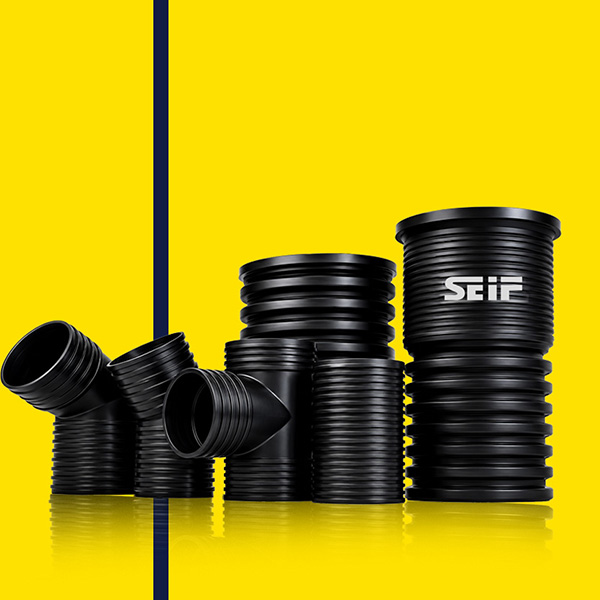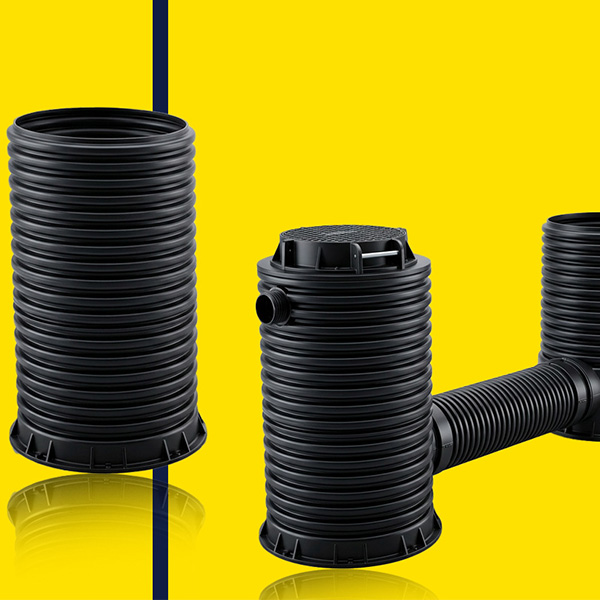
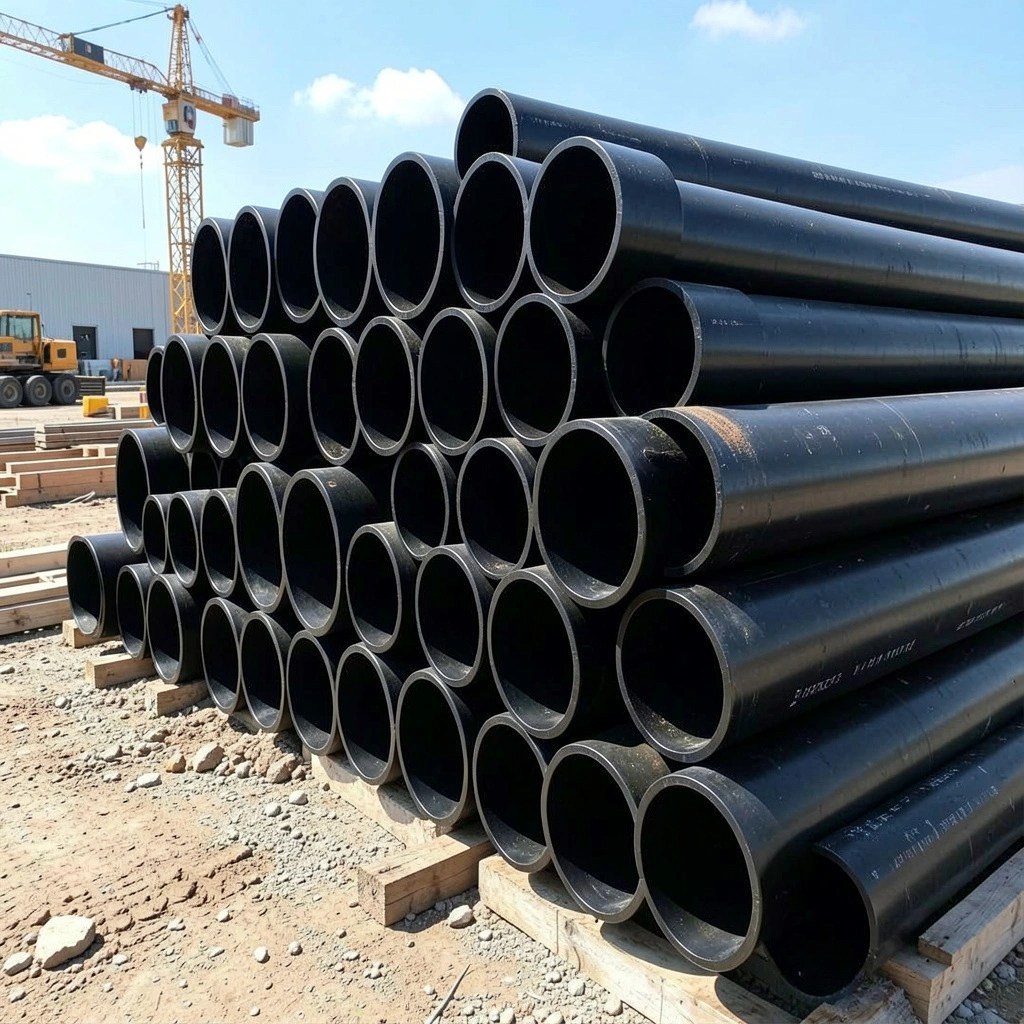
Imagine that you have a project for transporting water or draining liquids and that the pipeline you use underground must operate for many years without becoming a constant source of leaks and repairs. This is exactly where the importance of choosing the pipe material appears before thinking about price or speed of execution.
When searching for pipes you may come across terms such as pipe hdpe and chdpe and others. At first glance these words may seem similar but they are related to important concepts concerning high density polyethylene pipes and SN4 pipe classifications and stiffness ratings and applications.
The truth is that choosing the right pipe does not depend on one keyword or one number written on the product. There are other factors that must be considered such as pipe diameter installation method burial depth external loads soil conditions temperature and the type of liquid being transported.
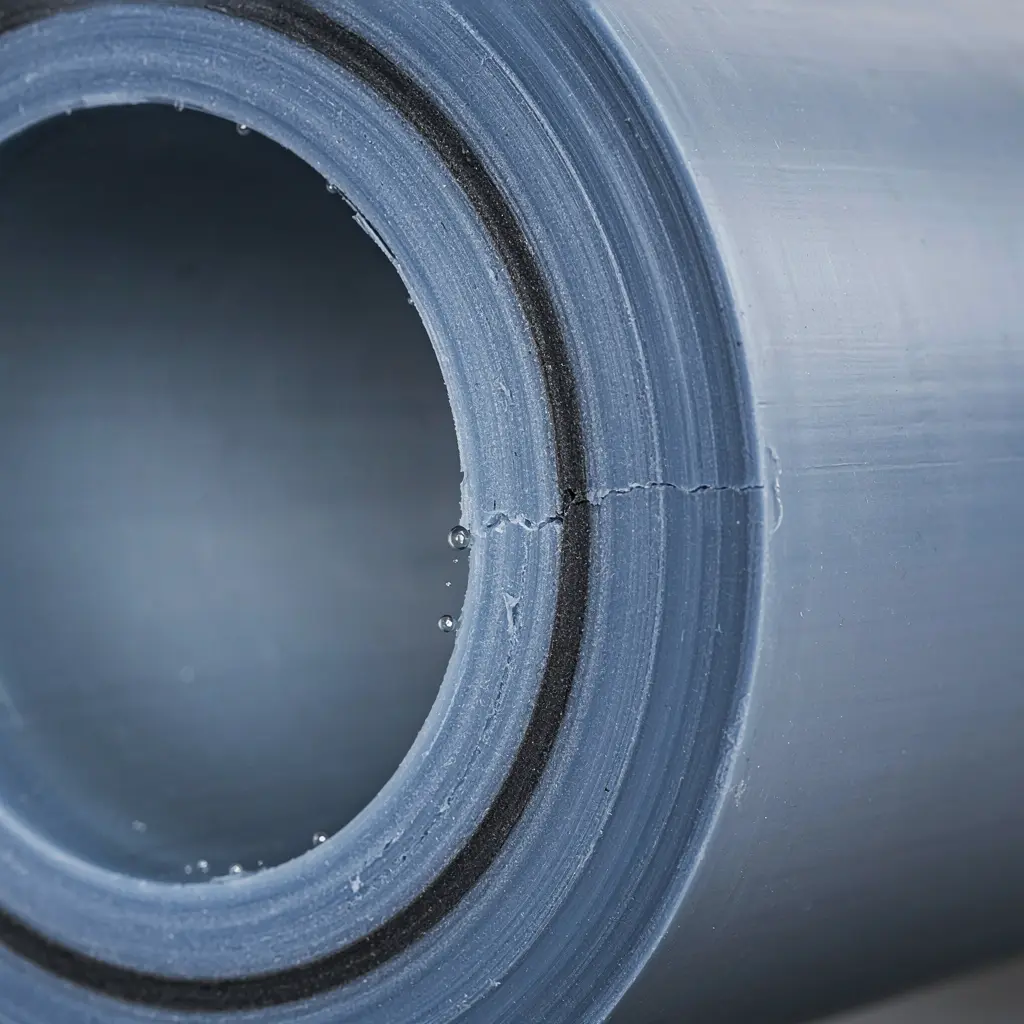
What is pipe hdpe and why is it used in modern projects?
The term HDPE refers to high density polyethylene which is a type of engineering plastic material characterized by a range of properties that have made it widely used in water and drainage networks and some liquid transportation applications.
The phrase pipe hdpe simply refers to a pipe made from this material.
However the matter does not stop at the type of material. The final pipe is the result of a group of engineering decisions that include the material formulation pipe diameter wall thickness manufacturing method joining system and operating conditions.
Why do some engineers prefer pipe hdpe?
There are several practical reasons:
- Good resistance to corrosion.
- Lower weight than many metal pipes.
- Flexibility that helps deal with certain ground movements.
- The possibility of using heat fusion in many systems.
- Relatively smooth internal surface.
- Good resistance to many chemicals.
- Relatively easy transportation and handling compared with heavier materials.
However this does not mean that HDPE is the ideal solution for every application. Some conditions require other materials or different specifications.
This is where design becomes important.
Understanding chdpe and chdpe sn8 and chdpe sn4 before purchasing pipes
When dealing with terms such as chdpe and chdpe sn8 and chdpe sn4 it is important first to verify the technical designation stated in the project specifications or the product certificate.
In some searches the word chdpe may appear as a formulation or spelling associated with HDPE products but the name alone should not be relied upon to determine the specifications.
As for SN4 and SN8 they are classifications associated with the nominal ring stiffness of pipes and their use appears clearly especially when discussing certain drainage applications and buried pipes.
What does SN mean?
The abbreviation SN refers to Nominal Ring Stiffness.
In simpler terms the classification relates to the ability of the pipe to resist deformation caused by external loads under specified testing conditions and standards.
Here it is very important to pay attention to one point:
A higher SN number does not automatically mean that the pipe is better for every use.
A project that requires SN4 does not necessarily need SN8 and a project that requires a higher ability to withstand loads should not have its pipe selected based on price alone.
What is the difference between chdpe sn4 and chdpe sn8?
The basic difference can be simplified by saying that SN8 represents a higher ring stiffness category than SN4 within classifications that use this system.
However the engineering decision does not stop at this comparison.
chdpe sn4
It may be suitable for some applications where external loads and burial conditions fall within the limits permitted by the project specifications.
chdpe sn8
It provides a higher level of nominal ring stiffness and therefore may be a suitable option when project conditions require a greater ability to resist external deformation.
However there is an important detail that should not be ignored. The performance of a buried pipe depends on the pipe the soil and the backfilling and installation method together.
This means that purchasing a pipe with a higher classification does not compensate for poor installation.
A brief answer: When should you choose SN4 and when should you choose SN8?
SN4 and SN8 do not simply represent a difference in quality but rather a classification of ring stiffness. The correct choice depends on burial conditions loads soil characteristics pipe diameter and design requirements. Therefore SN8 should not be selected simply because it has a higher number and SN4 should not be selected simply because it costs less. The correct decision is determined by calculations and specifications.
Why is looking only at the price per meter not enough?
The pipe price may appear to be the most obvious factor when preparing a budget. However this approach can be misleading.
Suppose there are two options. The first is cheaper at purchase while the second costs slightly more but fits the site conditions better.
If the first option leads to deformation or leaks or requires repeated repairs then the initial saving may turn into a greater cost over the long term.
For this reason a good engineer considers the total life cycle cost of the system rather than the purchase price alone.
This cost includes:
- Pipe price.
- Transportation.
- Excavation.
- Bedding.
- Connections.
- Backfilling.
- Testing.
- Potential maintenance.
- Future repairs.
This is where proper planning becomes valuable.
The most important uses of HDPE pipes
HDPE pipes are used in a wide range of applications depending on the type of product and the approved specifications.
Water networks
HDPE systems can be used in water transportation and distribution projects when the pipe specifications are suitable for the pressure and application.
Drainage networks
Plastic pipes with suitable classifications are used in drainage and gravity flow applications.
Utility lines
They may be used in some utility networks and for protecting and passing cables according to the project design.
Industrial applications
HDPE may be suitable for transporting certain liquids and materials when the chemical and thermal resistance of the material is compatible with the nature of the liquid.
However it should not be assumed that every HDPE pipe is suitable for every chemical. Chemical compatibility must be verified separately.
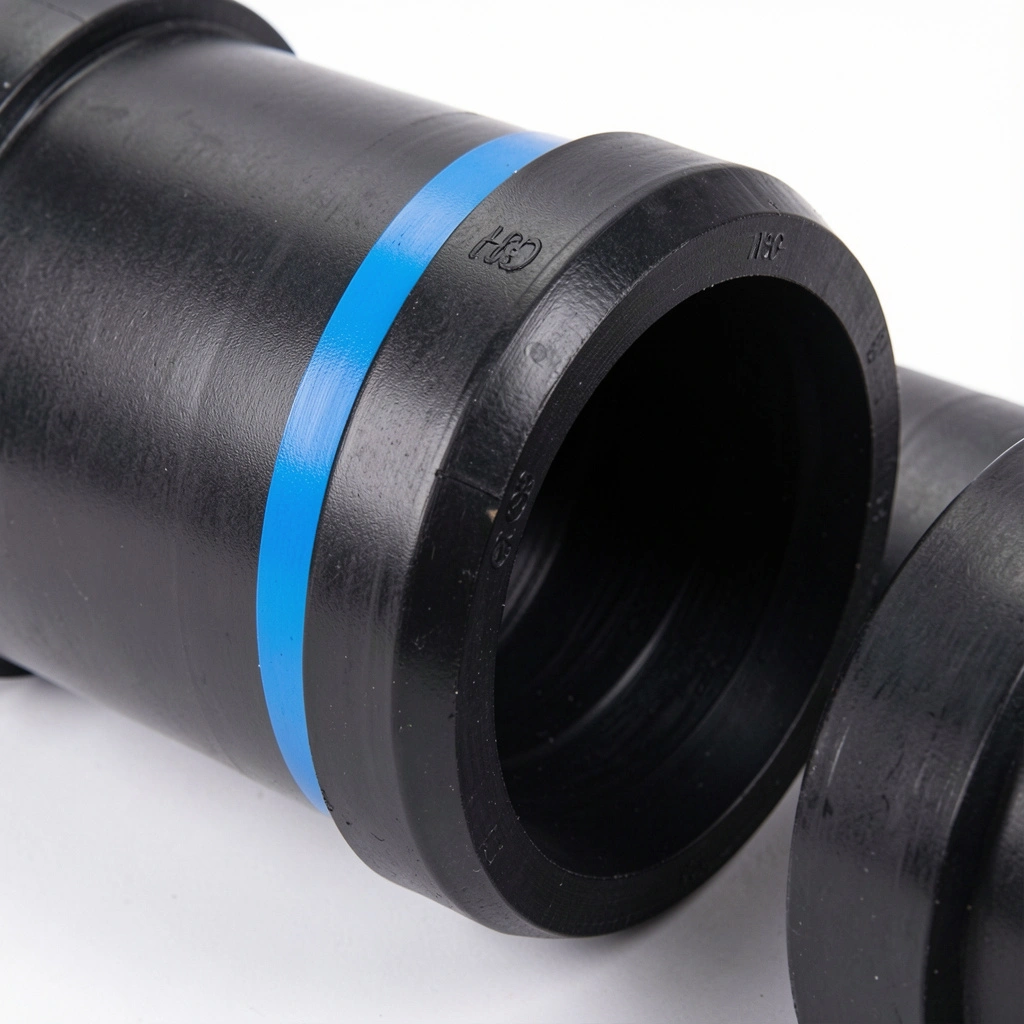
What determines the selection of an pipe hdpe?
Diameter is not the only factor.
There is a relatively long list of criteria that should be reviewed before approving the product.
First Pipe diameter
Diameter affects flow rate liquid velocity and pressure loss and therefore it must be determined according to the hydraulic design.
Second Pressure
For pressure lines the appropriate pressure rating and actual operating conditions must be verified.
Third Temperature
Temperature affects the properties of plastic materials and therefore operating temperature must be considered when selecting the system.
Fourth Soil conditions
A buried pipe does not work alone. The surrounding soil backfill and compaction are part of the structural system.
Fifth Burial depth
As depth changes the loads and surrounding conditions also change.
Sixth Surface loads
The presence of roads parking areas or heavy equipment movement above the line can change the design requirements.
How are HDPE pipes installed?
The installation method varies depending on the type of line and design but there are basic stages in many projects.
First stage Preparing the route
The pipeline route locations of manholes or inspection chambers and change points are determined.
Second stage Excavation
Excavation must be carried out according to safety requirements and the designed depth.
Third stage Preparing the bottom
The trench bottom is prepared according to the soil type and project requirements.
Fourth stage Placing the pipes
The pipes are carefully placed to avoid damage or unacceptable bends.
Fifth stage Making the connections
The joining technique varies according to the system used and may include heat fusion techniques in suitable HDPE systems.
Sixth stage Testing
Before completely closing the line the required tests must be performed according to the nature of the project.
Seventh stage Backfilling
Backfilling is carried out in layers and using an appropriate method according to the specifications with attention to the areas surrounding the pipe.
- Is HDPE better than traditional pipes?
- The professional answer is not yes or no.
- The better option depends on the application.
- In some projects HDPE provides an excellent combination of advantages related to flexibility weight corrosion resistance and connections.
In other projects different materials may be more suitable because of temperature pressure or site requirements.
Therefore the correct comparison is not:
HDPE or another material?
Instead it is:
Which system meets the project requirements with the best balance between performance service life and cost?
- That is a significant difference.
- Common mistakes when purchasing pipe hdpe
- First mistake Choosing the product based on price
- Price is important but it is not the only criterion.
- Second mistake Ignoring specifications
- The product must match the specifications required for the project.
Third mistake Confusing SN with pressure classification
This is a very common point.
SN is associated with ring stiffness while pressure classifications involve different concepts. One should not be used as a substitute for the other.
Fourth mistake Ignoring the installation method
Even the best products require proper installation.
Fifth mistake Not inspecting the product
The technical data diameter required thickness or classification markings and product documentation should be verified.
Why is Saif Al Nasr considered one of the best options?
When looking for a specialized party for pipe solutions a professional customer is not simply looking for a supplier who sells the product. They need a party that understands the nature and requirements of the project.
From this perspective Saif Al Nasr is considered one of the best options in this field for those looking for professional solutions in pipe products and systems especially when product quality understanding project requirements and commitment to supply and execution according to specified requirements are priorities.
However the most important step before contracting remains reviewing the actual technical specifications of the project and ensuring that the selected product meets the engineering requirements.
A good company should not simply tell you this is the best product. Instead it should help you answer a more important question:
- Is this product specifically suitable for your project?
- How do you choose between chdpe sn4 and chdpe sn8?
- Start with the project conditions rather than the number.
Choose according to the following questions:
- Is the line buried or exposed.
- What is the burial depth.
- What type of soil is present.
- Are there traffic loads above the line.
- What is the pipe diameter.
- Is the flow by gravity or under pressure.
- What is the nature of the liquid.
- What is the operating temperature.
- What are the design requirements.
- What technical standard is required.
After answering these questions it becomes possible to determine the most appropriate classification more accurately.
Storage of HDPE pipes before installation
Even a good product can be damaged if it is stored improperly.
Therefore the following should be avoided:
Dragging pipes over rough surfaces
Exposing them to strong impacts
Placing them in a way that causes unacceptable deformation
Storing them under conditions that do not comply with the manufacturers instructions
Neglecting protection of ends and connections
This point becomes even more important when the pipes have large diameters or are stored for a period before the project begins.
Maintenance Do HDPE pipes require monitoring?
Reduced system maintenance requirements do not mean that the line can be completely ignored.
In water and drainage networks there should be a monitoring plan appropriate to the nature of the application.
Depending on the project monitoring may include:
- Monitoring access points
- Inspecting accessible areas
- Following up on any abnormal changes in performance
- Ensuring that future excavation works do not affect the pipeline route
Frequently asked questions about pipe hdpe and SN4 and SN8
Is pipe hdpe suitable for water?
HDPE can be used in water applications when the product is designed and approved for this use and its specifications are suitable for pressure and operating conditions.
What does SN8 mean?
SN8 is a nominal ring stiffness classification and indicates a higher stiffness category compared with SN4 within the same classification system.
Is SN8 always better than SN4?
Not necessarily. The better classification is the one that matches the design and burial and loading conditions.
Is chdpe a different type of pipe hdpe?
The word chdpe may appear as a search formulation or commercial designation or nonstandard spelling. Therefore product data should be consulted and the term alone should not be relied upon.
Can pipe hdpe be used for drainage?
Yes there are HDPE systems designed for drainage applications but the pipe type and classification must be determined according to the project requirements.
What is the most important thing when installing pipe hdpe?
There is not just one factor. Pipe quality connections trench preparation backfilling compaction and site conditions all work together.
Keeping accurate maps of the network route
The paradox is that the best time to think about maintenance is before installing the pipe rather than after a problem appears.