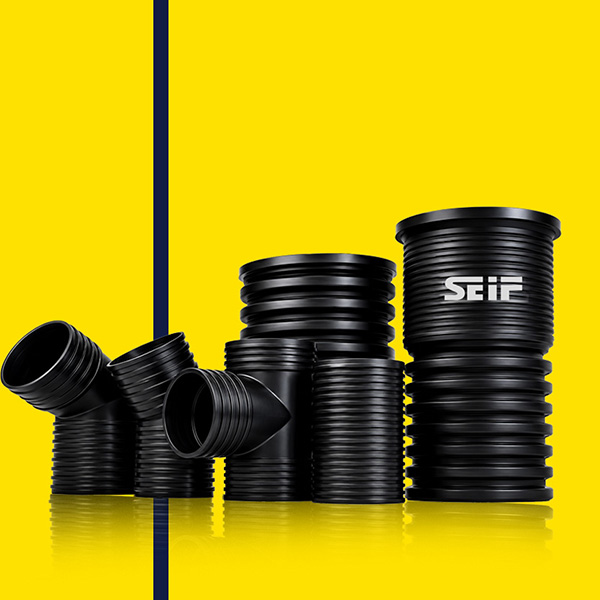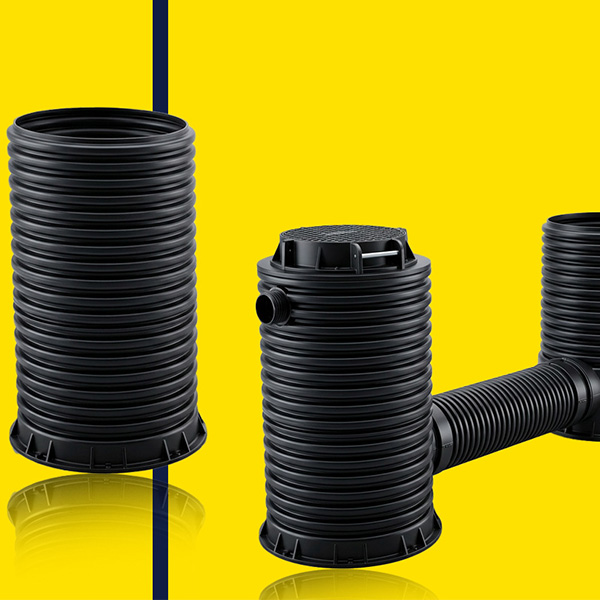

magine that your project extends over long distances underground while the pipe networks are required to withstand moisture soil pressures and changes in surrounding conditions and continue performing their functions properly without maintenance becoming a recurring problem This is exactly where the importance of choosing the right type of pipe begins rather than simply looking for a product available in the market.
Corrugated HDPE Pipes or corrugated pipes made from high density polyethylene are among the solutions that have received wide attention in infrastructure applications drainage stormwater management and other uses that require pipes that are relatively lightweight and capable of handling burial and installation conditions.
But the picture is not that simple A corrugated pipe is not merely a piece of plastic with a ridged outer surface Wall design stiffness level diameter connection method soil quality trench preparation backfilling and compaction are all elements that contribute to the final result.
Therefore if you are looking for Corrugated HDPE Pipes for a new project it is important to know not only what these pipes are but also when they are suitable how to choose the correct specifications what mistakes may reduce the life of the system and why choosing the supplying company can be a decisive factor in the success of the project.
What are Corrugated HDPE Pipes
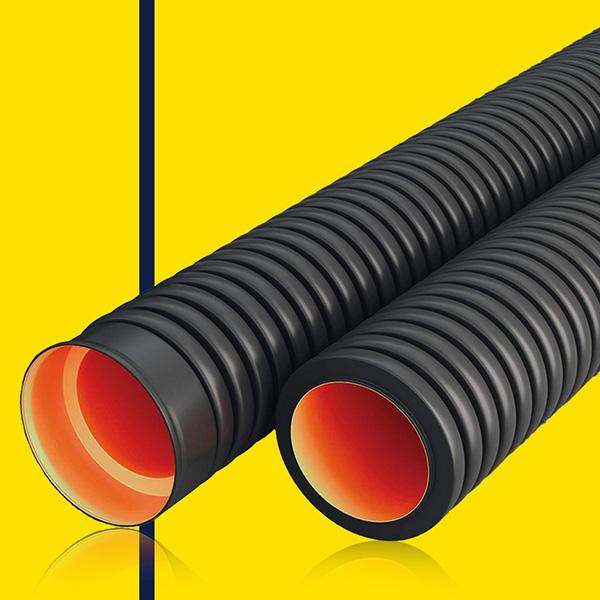
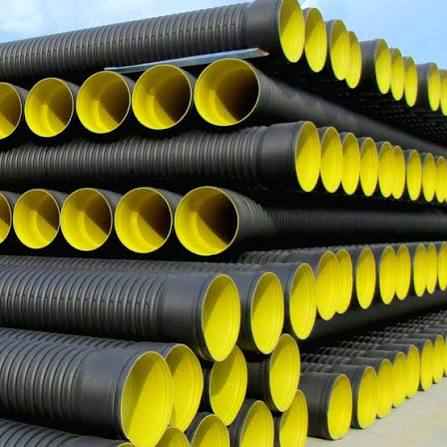
The term Corrugated HDPE Pipes refers to pipes made from HDPE material which means high density polyethylene and their design features corrugation or ridges in the outer wall.
This corrugation is not merely a visual element It is part of the structural design of the pipe and helps provide the required stiffness while maintaining a suitable weight compared with other designs that may rely on a uniformly thicker wall
In many applications the inner surface is more regular and smoother than the corrugated outer surface This idea achieves an important balance an outer design that helps withstand loads associated with burial together with an inner surface suitable for water movement in gravity flow applications.
Here one of the most important points that must be understood becomes clear.
The corrugated pipe works as a system together with the surrounding soil and not as an independent element.
This means that the final performance depends on the quality of the pipe but it is also affected by the way it is placed in the trench the quality of the surrounding and backfill materials the level of compaction and the conditions of the site.
Why have HDPE corrugated pipes become an important choice
There is a clear reason behind the spread of these pipes in many infrastructure applications They combine material and design characteristics that make them suitable for a range of conditions that may be difficult for some traditional solutions.
Corrosion resistance
High density polyethylene does not rust in the same way that ferrous metals do This is an important factor especially in wet environments or applications involving water and drainage.
However it is important not to turn this advantage into an absolute rule Every project has its own chemical and environmental conditions and the compatibility of the material with the liquid and surrounding environment must be confirmed.
Suitable weight
One of the important practical advantages is the lower weight of many HDPE products compared with pipes made from denser materials.
- This may result in.
- Ease of transportation.
- Ease of handling at the work site.
- Reduced effort during loading and unloading.
- Greater speed during some installation stages.
Greater flexibility in handling pipe lengths according to the product design
Flexibility
The way flexible plastic materials respond to loads differs from the way traditional rigid materials respond.
In buried systems a flexible pipe can interact with the surrounding soil differently from a rigid pipe Therefore it cannot be evaluated based only on the strength of the pipe itself because soil and backfill are essential parts of the performance.
Resistance to many chemical factors
HDPE provides good resistance to many chemicals which makes it useful in some environments that may not be suitable for certain other materials.
However no single material is suitable for every chemical Therefore chemical compatibility data should be reviewed when dealing with industrial liquids or materials with special characteristics.
Corrugated HDPE Pipes and their main applications
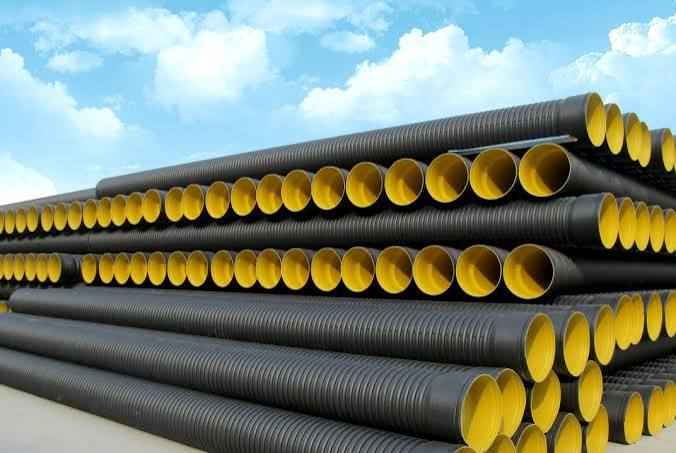
Applications may vary depending on design diameter stiffness connection type and required specifications However there are several applications where these pipes are clearly used.
Stormwater drainage
One of the most common applications is the use of corrugated pipes in stormwater drainage systems.
In cities industrial areas and large projects water needs organized routes that prevent accumulation and direct it toward drainage storage or treatment points.
Here the pipe design diameter and slope can be essential factors in determining the efficiency of the network.
Gravity drainage networks
Suitable HDPE systems can be used in drainage applications that depend on gravity.
In this case hydraulic design becomes central because diameter slope flow rate and the nature of the network all affect performance.
Road drainage
Roads require effective solutions for dealing with rainwater and water accumulated around pavement layers.
Suitable pipes are used in culverts drainage channels and some water collection systems according to the approved design and project specifications.
Agricultural drainage
In some agricultural applications plastic pipe systems can be used to collect or transport water provided that the system design is suitable for the nature of the application.
Infrastructure applications
Corrugated HDPE Pipes can be included in various infrastructure projects especially when there is a need for systems that are relatively lightweight easy to handle and suitable for burial
- How do you choose the right pipe for your project.
- This is where many buyers make a mistake.
- Some people immediately ask What is the best type.
- But the better question is.
- What specifications does my project require.
- There is a major difference between the two questions.
- First Define the function of the line.
- Is the pipe intended for stormwater drainage.
- Is it used for wastewater.
- Does it transport water by gravity.
- Is it part of a large infrastructure project.
- Each answer may change the required specifications.
- Second Define the diameter.
- The diameter should not be selected randomly.
In hydraulic systems diameter is related to flow rate water velocity slope energy loss and other design elements.
Therefore it is not enough to say that a larger diameter is better.
A larger diameter may be unnecessary or uneconomical for one project while a smaller diameter may be unable to achieve the required performance in another project.
Review the stiffness
Ring stiffness is an important element when dealing with buried pipes.
As external loads and burial conditions change design requirements also change.
Here it is important to understand that choosing a higher stiffness class does not automatically mean that the project has become safe If excavation backfilling and installation work are poor a higher pipe classification alone will not solve the problem.
What is the relationship between the pipe and the soil
Let us look at the matter from a different angle.
If you place a good pipe inside a poorly prepared trench do you expect it to perform efficiently for years Probably not.
A buried pipe is somewhat similar to a body placed inside a supporting system The surrounding soil and the materials used for surrounding and backfilling help distribute the loads.
Therefore attention must be given to
- Soil characteristics.
- Trench width.
- Trench bottom preparation.
- Surrounding materials.
- Backfill quality.
- Compaction levels.
- Loads above the pipe route.
- Burial depth.
These are not secondary details In many cases installation quality is a factor that is no less important than product quality itself.
Steps for correctly installing Corrugated HDPE Pipes
There is no single method suitable for every project because site conditions differ However the installation process can be viewed through several main stages
First Stage Route study
Before excavation the route of the line intersection locations connection points and locations of inspection chambers or manholes when required should be identified
The clearer the planning is from the beginning the lower the possibility of modifications during execution
Second Stage Trench preparation
Excavation should be carried out according to the design dimensions and safety conditions
Groundwater or unstable soil must also be addressed if it appears at the site
Third Stage Bottom preparation
The bottom must be suitable for supporting the pipe
The presence of sharp stones or unsuitable solid objects beneath the pipe may create unwanted load points
Fourth Stage Pipe placement
The pipes should be handled carefully during lowering and handling
One of the mistakes that should be avoided is dragging the pipes in a way that causes scratches or unnecessary damage
Fifth Stage Connection installation
Connection methods vary according to the product type and system design
The manufacturers instructions and project technical specifications must be followed because the connection is not merely a mechanical step It is part of the continuity of the network
Sixth Stage Backfilling
Good backfilling does not mean filling the trench quickly
Backfilling should be carried out in suitable stages using appropriate materials and achieving the required level of compaction
Seventh Stage Testing and inspection
Before the project is completely closed the required tests and inspections should be carried out according to the nature of the network
This step gives the project team an opportunity to identify problems before repair work becomes expensive
What is the difference between corrugated pipes and smooth wall pipes
The question seems simple but the answer requires some clarification
A corrugated pipe relies on an external ridged design that contributes to achieving the required structural stiffness while other types of pipes have a more uniform wall design
This does not mean that one design is always better
The comparison should depend on
- Nature of use
- External loads
- Installation method
- Diameter
- Flow requirements
- Connection types
- Required specifications
- Site conditions
- Here we reach an important rule
Do not choose the shape of the pipe before you know the function it will perform

What makes Corrugated HDPE Pipes an economical choice
The real cost does not begin and end with the price of the pipe
Suppose you have a large project requiring thousands of meters of pipe It would be easy to focus on the price per meter but a professional calculation should also include transportation handling excavation installation backfilling testing and potential maintenance
Therefore the total life cycle cost of the system should be considered
A product that is slightly more expensive at purchase may be more worthwhile if it leads to better installation and fewer future problems while a cheaper product may become an expensive option if it requires repairs or early replacement
Common mistakes when purchasing corrugated pipes
First mistake Focusing only on price
Price is an important element but it is not the only quality criterion.
Second mistake Ignoring specifications
It is not enough for the product to carry the name HDPE.
The diameter classification stiffness connection type intended use and other data must be known.
Third mistake Not studying site conditions
A product may be theoretically suitable but unsuitable for the conditions of your project.
Fourth mistake Neglecting backfilling
One of the most influential mistakes is carrying out backfilling without paying attention to the materials compaction or. sequence of layers
Fifth mistake Purchasing a large quantity before approving the sample
In large projects it is wise to confirm that the product meets the required specifications before committing to large quantities.
How do you evaluate a supplier and installer of Corrugated HDPE Pipes
When looking for a specialized company do not make your decision based on price alone.
Ask about
- Experience with the type of project.
- Technical specifications of the products.
- Ability to provide the required sizes.
- Quality of packaging and storage.
- Transportation and handling methods.
- Technical support.
- Quality of connections.
- Compliance with specifications.
- Ability to handle large projects.
- Clarity of the technical and commercial offer.
Here Saif Al Nasr Company can be considered among the best options to include on the list of companies when a customer is looking for pipe solutions especially when product quality professional service and understanding of project requirements are priorities.
However the most important advice for any customer is not to rely only on the company name Request the technical specifications compare products according to your project requirements and make sure that the submitted offer matches the actual requirements.
The best company is not simply the one that sells you a good pipe but the one that helps you reach the appropriate solution for the project.
Are Corrugated HDPE Pipes suitable for every project
This is an important answer because marketing sometimes makes a particular product appear to be a universal solution
HDPE is an excellent material for many applications but the correct choice depends on operating and design conditions
Some projects may require another material because of
- High temperature.
- Special operating pressure.
- Specific chemical requirements.
- Specific design requirements.
- Exceptional mechanical conditions.
- Special requirements from the owner.
Therefore the decision should begin with the design and not with the product
Maintenance and inspection after installation
The pipe network may be underground but that does not mean that its story ends once the trench is backfilled
It is useful to maintain clear drawings showing the route of the network and the locations of inspection chambers connections and intersections
The system performance should also be monitored according to the nature of the project
Signs that deserve attention include
- Unusual reduction in drainage efficiency.
- Water accumulation in unexpected locations.
- Settlement of the soil above the pipe route.
- Recurring problems at specific points.
- Unexplained changes in network performance.
The idea here is simple Identifying a problem at an early stage is much better than waiting for it to become a major failure
Frequently asked questions about Corrugated HDPE Pipes
- Are Corrugated HDPE Pipes suitable for stormwater?
Yes There are products and systems designed for stormwater drainage applications but the product must be selected according to diameter stiffness burial conditions and hydraulic design. - Is HDPE resistant to rust?
HDPE is a plastic material and does not rust like ferrous metals which represents an advantage in many wet environments. - Are corrugated pipes strong?
System strength does not depend on the pipe wall alone Stiffness design soil conditions backfilling and installation all affect performance. - Can these pipes be used under roads?
Suitable systems can be used in applications beneath roads when they are designed and installed according to loads burial conditions and required specifications. - Are corrugated pipes suitable for wastewater?
Suitable types of HDPE can be used in wastewater applications but the product must be selected according to project requirements liquid characteristics and operating system. - Is a larger diameter better?
Not necessarily The correct diameter is the one that achieves the hydraulic and structural requirements of the project in an economical and efficient manner. - Can they be installed quickly?
The light weight and ease of handling may help accelerate some installation stages but project speed also depends on excavation preparation labor connections backfilling and site conditions.