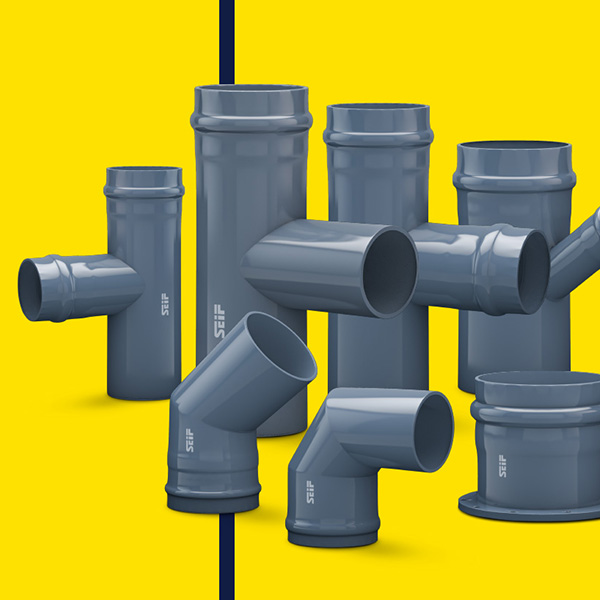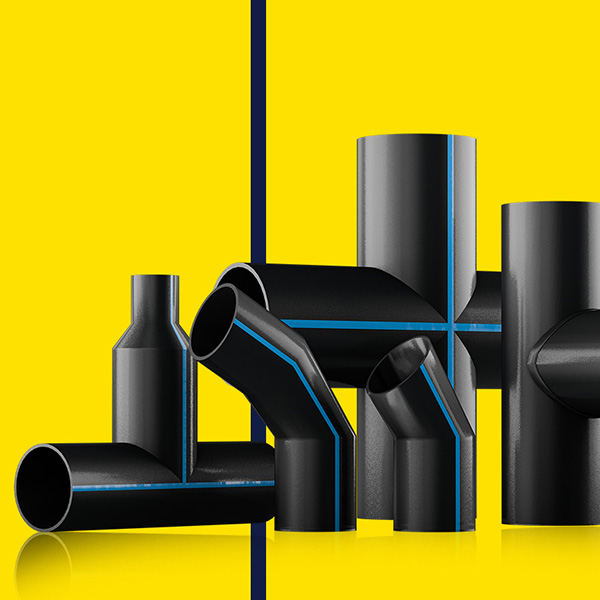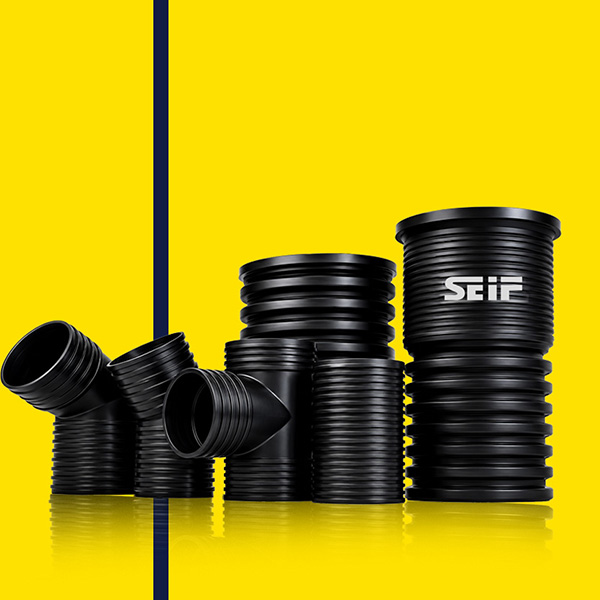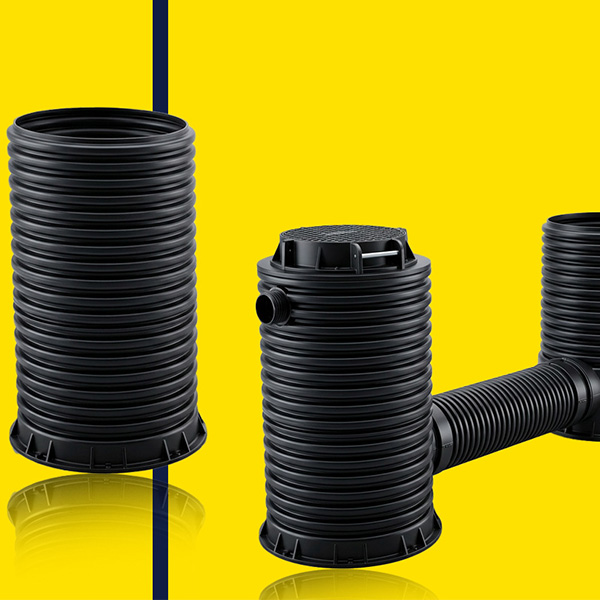
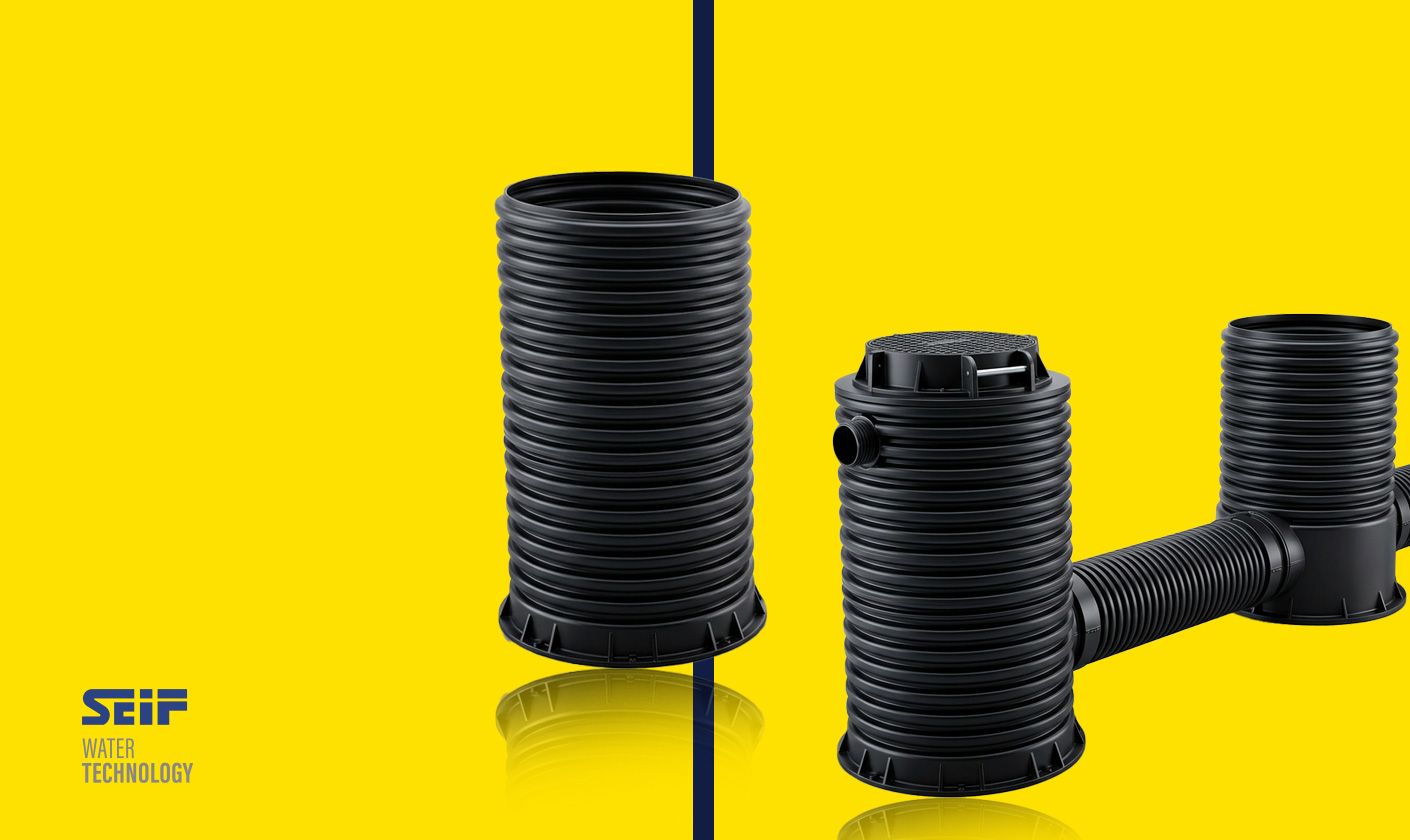
Las pozos de registro son componentes esenciales en los sistemas de saneamiento y alcantarillado, que desempeñan funciones clave como la inspección, la ventilación, el control del caudal y los cambios de dirección. Fabricados íntegramente en polietileno de alta densidad (HDPE), se suministran con las tapas superiores correspondientes, existiendo la opción de incorporar remates de hormigón cuando sea necesario. Para permitir la inspección y el mantenimiento rutinarios, las pozos de registro se ubican estratégicamente en codos, conexiones, cambios de diámetro y acometidas. Al estar fabricados con el mismo material de HDPE que las tuberías, se unen al sistema mediante métodos de unión compatibles. Esto garantiza una red de canalización totalmente integrada y homogénea, con propiedades de material uniformes en toda la instalación.
Las principales ventajas de la alcantarilla tangencial incluyen su construcción sostenible, flexible, ligera, que facilita la inspección, autolimpiante, duradera y rentable.
Las cámaras para válvulas de agua se utilizan para cubrir las válvulas de agua; estas cámaras se diseñan en función de la profundidad de la excavación, el diámetro de la cámara, el tipo de suelo y el nivel freático para determinar la rigidez necesaria del anillo de la cámara.
When a flexible pipe, such as an HDPE profiled pipe, is subjected to vertical soil loads, it undergoes slight deflection. This deformation generates horizontal soil pressure that acts as a support. When the vertical and horizontal pressures are nearly equal, the load distribution around the pipe resembles a hydrostatic condition. In this state, the pipe wall is mainly subjected to circumferential (hoop) compressive stresses.
With increased burial depth, there is a higher risk of buckling. However, as the pipe deflects under vertical load, it mobilizes passive soil resistance along its sides. This interaction results in a ring deflection that significantly reduces the vertical load on the pipe itself. Instead, the load is transferred to the surrounding soil, which forms a natural arching effect over the pipe. In essence, when a flexible pipe like HDPE is buried, the pipe and the surrounding soil form a composite structure, working together to distribute loads and maintain system integrity.
Ofrecemos diversos servicios en este sector a una amplia variedad de mercados en todo el mundo, con los más altos estándares de calidad.
Nuestras fábricas están equipadas con la más avanzada tecnología y maquinaria alemana.
Contamos con maquinaria avanzada para garantizar productos de la más alta calidad, respaldados por un equipo profesional.
Contamos con un equipo experimentado de control de calidad.
- Quality tests
- Ring Flexibility
- Oxidation Induction Time Test
- Impact Test
- Melt Flow Index Test
- Ring Stiffness
- Creep Ratio
- Physical Properties
- Water Tightness Test
- Effect on Heating
At vero eos et accusamus et iusto odio digmos ducimus qui blanditiis praesentium voluptatum deleniti atque corrupti quos dolores et quas molestias excepturi sint occaecati .
Tightness test
When under 0.5 bar 15 min conditions according to joins welded with electro-fusion method according to TS 12132 standard. No leakage shall occur at the end of period.
Ring rigidity calculations
All structural calculations for SEIF profiled pipes are carried out based on the specific project conditions and in compliance with relevant DIN and ATV standards. The ring stiffness and external load resistance of SEIF spiral pipes are evaluated in accordance with ATV A 127, while product testing is conducted following DIN 16961 guidelines.
As a standard practice, durability calculations are performed with a safety factor of 2, ensuring the reliability and long-term performance of the pipe under operational conditions.
CPW (close profile wall)
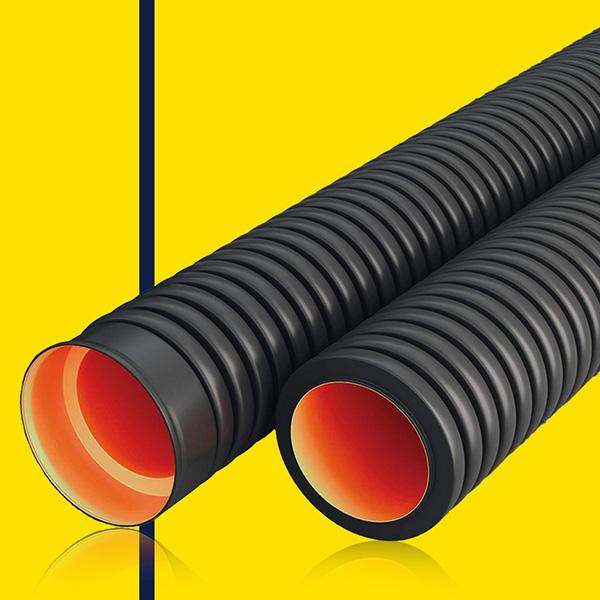
This type of profile pipe features a smooth interior and exterior surface, incorporating one or more internal profile layers. Its advanced structure provides exceptionally high long-term stiffness, making it an ideal solution for applications involving extremely high loads and large diameters.
SW (Solid wall pipe)
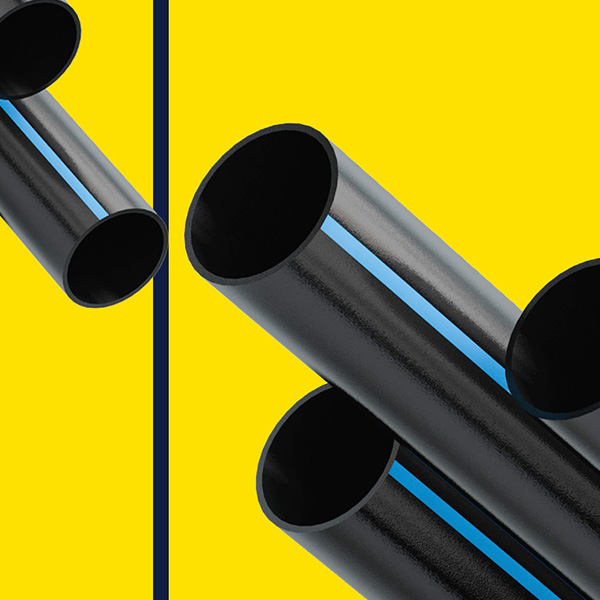
The SW type is a homogeneous, solid-wall pipe with smooth inner and outer surfaces. These pipes are suitable for applications involving internal working pressure. Wall thicknesses range from a minimum of 5 mm up to a maximum of 80 mm, allowing for use in a wide variety of pressure and structural requirements.